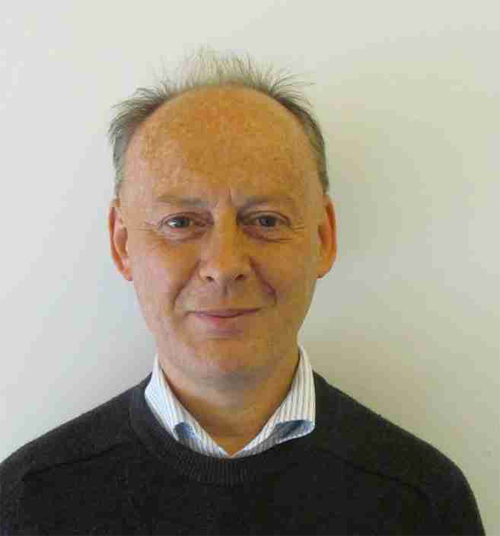
Professor Adrian Davis of Edinburgh Napier University has spent over 30 years working on transport and health, and is internationally recognised as an expert in the field.
A founder member of the Transport and Health Study Group in 1988, he has been a consultant to the Department of Health, Department of Transport, World Health Organisation and other public bodies.
The Essential Evidence series was initiated by Adrian in 2008 to provide a de-jargonised service to transport planning colleagues in Bristol City Council at the time when the city had just commenced "Cycling City" status and he had begun the UK's first embedded post as a public health specialist inside a local highway/roads authority.
The key point of these 1-page briefings has been to bring to officers and others data and evidence about the health impacts of aspects of transport planning which would otherwise probably remain "locked away" in the ivory towers of academia in seemingly arcane journals that transport planners has very likely never heard of let alone accessed (and often also behind a paywall). it seemed self-evident to Adrian, having chosen a career path in both public health and transport planning that there was a need to provide some of this evidence, often from non-transport disciplines, to transport planners so as to help better inform transport-planning decision-making.
When he took up the Chair of Transport & Health at Edinburgh Napier in 2018 it was logical to start a Scottish version (evidence accepts no geographical boundaries!).
Essential Evidence uses evidence from peer-reviewed literature to strengthen the case for current transport policies and practice. A single-page format was established better to disseminate academic research to practitioners for implementation within planning and policy. Evidence summaries in the Bristol series examined the politics of transport planning, impacts of increasing physical activity and the effectiveness of a 20 mph speed restriction, and the "Inverse Care Law" (see below).
Public health and medicine work to an evidence hierarchy where expert opinion testimonials, observational case studies and uncontrolled studies and monographs placed below small and large RCTs and systematic reviews in terms of increased robustness of evidence not least the weeding out of biases. A policy-makers' hierarchy puts research evidence below media, internet and lobby-group evidence, with professional associations and party think-tanks lying between them and expert advice. In the post WWII period many major transport policy decisions were the result of roads lobby interests. In public health these are part of commercial determinants of health and public health draws on long experience in struggling with the likewise powerful and well-resourced tobacco lobby. Lobbying of course remains today with huge biases in terms of resources at the disposal of commercial interests which often undermine population health goals for healthier and longer lives free of disease.
Intended audiences of Essential Evidence are local authority staff and councillors, sustainable transport activists and academics. Content covers all health aspects from road transport, sustainable transport studies, aspects of road safety, politics and decision-making biases, car-dependency and physical activity across life, with every issue reporting on at least one peer-reviewed study, ensuring its UK relevance and de-jargonisation.
Some Evidence summaries draw on historical cases to highlight general outcomes such as inequitable distribution of health harms such as through analysis of road casualties in Bristol showed a correlation with deprivation, bearing out the "Inverse Care Law" that the people who need something the most are the ones least able to advocate for it. Another example, from South Yorkshire where the bus-fares freeze from 1975 had yielded a rise in use against national trends, until the Transport Act 1985 imposed a 250% fare rise which was followed by 62% and 60% reductions in bus use among the unemployed and retired, a 37% reduction for the employed and 48% among children - and a steep rise in requests for formal home-help.
While the Essential evidence series is focused on the UK Prof Davis remains mindful that across the world 90% of road-traffic deaths occur in low and middle-income countries which bear a disproportionate number of deaths relative to their level of motorization : more than 80% of people living in urban areas that monitor pollution are exposed to air-quality levels that exceed WHO guidelines. 97% of cities in low and middle-income countries do not meet these, however in high-income countries that decreases to 49%. Pioneering work by psychologists Daniel Kahneman and Amos Tversky found that getting decision-makers to pay attention to, understand and act on robust evidence was very hard in the face of "gut feelings" and systematic cognitive biases, poor judgment in uncertainty and misunderstandings of probabilities.
COP26 at Glasgow in 2021 was attended by no less than 500 representatives of fossil-fuel companies, and their dominance in lobbying grows at each new COP event. More locally, at the Scottish Parliament under 5% of evidence comes from academics, most of the rest being from lobbyists. Looking back, the commercial determinants of health are reflected in the half-century that it took from confirmation of the link between smoking and lung-cancer to introduction of the smoking ban. While evidence alone is not enough, it is still needed and arguably in concise and accessible formats. A positive coda is the recent decision in Northern Ireland to adopt Graduated Driving Licences for young drivers, based in no small part long-term on evidence-based advocacy by road safety groups and bereaved parents.
To view Professor Davis's presentation, click on the Video Icon below.

Report by John Yellowlees.
The CILT Logo is a registered trademark of the Chartered Institute of Logistics and Transport
Unless otherwise stated, site and contents © John G. Fender 1997 - 2027. All rights reserved.
Site designed & maintained by John G. Fender, Bsc., FCILT